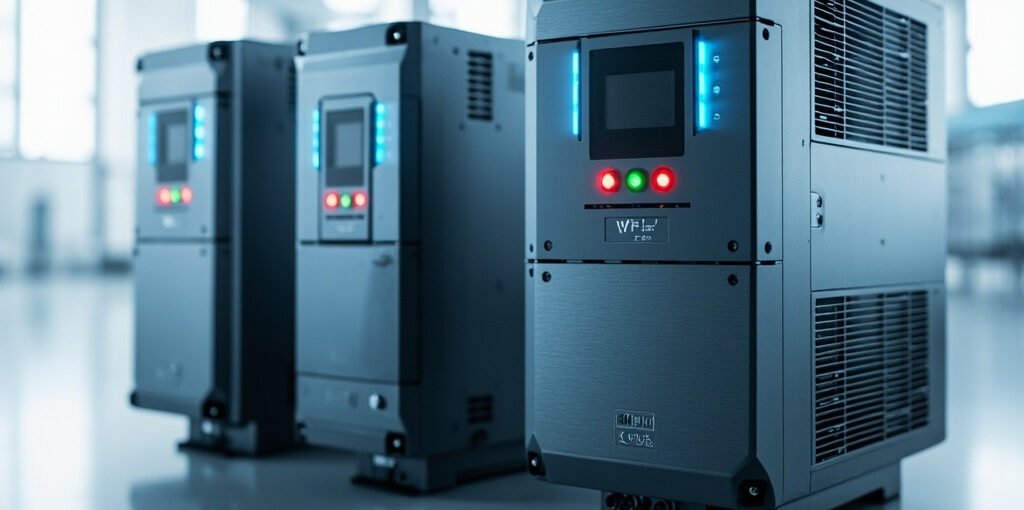
Variable Frequency Drives (VFDs) have become essential components in modern industrial automation and motor control applications. Schneider Electric, a global leader in energy management and automation, offers a comprehensive range of VFD products that are widely trusted across industries. However, the rising cost of imported automation equipment has prompted many businesses to explore more budget-friendly alternatives without sacrificing quality or performance. Chinese VFD manufacturers have emerged as strong competitors in this space, offering technically capable drives at significantly lower price points. This shift has created new opportunities for companies looking to optimize their automation budgets while maintaining reliable motor control systems.
Understanding the landscape of Chinese VFD alternatives requires examining multiple factors including technical specifications, build quality, support infrastructure, and long-term reliability. The Chinese manufacturing sector has invested heavily in research and development over the past decade, resulting in products that increasingly match or approach the performance standards set by established European and American brands. Companies like DELTA, INVT, and LS Electric have built reputations for delivering solid performance in standard industrial applications, making them attractive options for cost-conscious projects.
The decision to choose a Chinese VFD alternative over a Schneider product involves weighing several considerations. Price differences can range from 30% to 60% depending on the specific model and application requirements, which represents substantial savings for facilities deploying multiple drives. However, buyers must also consider factors such as available technical support, documentation quality, spare parts availability, and the manufacturer’s track record for long-term product support. Understanding these trade-offs will help you make an informed decision that aligns with your operational needs and budget constraints.
Chinese VFD manufacturers have made significant strides in bridging the technology gap with Western competitors. Modern Chinese drives now incorporate advanced features such as vector control, built-in PLC functionality, Modbus and Profibus communication protocols, and sophisticated energy-saving algorithms. These capabilities make them suitable for a wide range of applications including HVAC systems, pumps, fans, conveyors, and general-purpose motor control. The key is matching the specific technical requirements of your application with a drive that provides adequate performance without unnecessary features that increase cost.
Leading Chinese VFD brands have established themselves through consistent quality and expanding global presence. DELTA Electronics, headquartered in Taiwan but with extensive manufacturing operations in mainland China, offers the C2000 and VS Series drives that provide excellent performance for industrial applications. INVT (Shenzhen INVT Electric Co.) has developed a strong reputation for reliable drives with comprehensive feature sets at competitive prices. Other notable manufacturers include LS Electric, whose IS series drives offer good compatibility with international standards, and various other brands that serve specific market niches with specialized products.
When evaluating Chinese VFD alternatives, creating a detailed comparison helps identify the best options for your specific needs. The following table outlines key parameters across major manufacturers to facilitate your evaluation process:
| Manufacturer | Power Range (kW) | Control Modes | Communication | Typical Warranty |
|---|---|---|---|---|
| DELTA C2000 | 0.4 – 400 | V/F, Vector, PM Motor | Modbus, CANopen, Profibus | 18-24 months |
| INVT GD20 | 0.4 – 500 | V/F, Vector, Torque | Modbus, RTU, Ethernet | 18 months |
| LS IS7 | 0.4 – 220 | V/F, Vector | Modbus, Profibus | 24 months |
| Schneider ATV | 0.18 – 1500 | All modes + specialized | All major protocols | 36 months |
The table above demonstrates that Chinese manufacturers offer comparable technical specifications to Schneider products, particularly for standard industrial applications. Power ranges, control modes, and communication options are generally sufficient for most common motor control scenarios. The primary differences emerge in warranty periods and the breadth of specialized functions available for niche applications.
Selecting the appropriate Chinese VFD alternative requires systematic evaluation of your application requirements against available product capabilities. Begin by documenting the fundamental parameters of your motor control application, including the motor horsepower, voltage supply, expected operating environment, and the criticality of the controlled process. Standard applications such as pump control, fan modulation, and basic conveyor drives typically work well with mid-range Chinese VFDs, while more demanding applications involving high starting torque, precise speed regulation, or hazardous locations may require premium products or continued investment in established brands.
The installation and integration process for Chinese VFDs follows similar principles to Schneider drives but may present unique challenges. Proper grounding, electromagnetic compatibility considerations, and thermal management remain critical for reliable operation. Chinese drives often use different default parameter settings than Western brands, so careful review of the programming manual is essential before commissioning. Many Chinese manufacturers provide multilingual documentation, though the quality of English translations can vary significantly between brands.
Programming differences represent one of the most significant adjustments when transitioning from Schneider to Chinese VFDs. Schneider drives use their own parameter naming conventions and menu structures through SoMove software or onboard keypad interfaces. Chinese alternatives typically employ different parameter codes and may organize settings in ways that require operators to learn new procedures. Investing time in proper operator training before installation can prevent commissioning delays and reduce the risk of parameter misconfiguration.
The long-term maintenance implications of choosing Chinese VFD alternatives deserve careful consideration. While initial acquisition costs may be lower, the availability of replacement units, spare parts, and technical support over the drive’s operational lifespan should factor into your total cost of ownership calculations. Established Chinese manufacturers generally maintain good spare parts availability through their global distribution networks, but lead times for specialized components may be longer than domestic suppliers. Building relationships with multiple suppliers and maintaining strategic spare drive inventory can mitigate these risks.
Environmental considerations and certifications vary between manufacturers and may affect product suitability for your installation. Chinese VFDs intended for export typically carry CE, UL, or CSA certifications required for Western markets, but the specific certifications held by each model should be verified before purchase. Industrial environments with extreme temperatures, high humidity, or corrosive atmospheres may require drives with enhanced environmental specifications that not all Chinese manufacturers offer.
For facilities already operating Schneider VFD infrastructure, hybrid approaches can optimize the balance between cost savings and operational consistency. Using Chinese alternatives for non-critical auxiliary equipment while maintaining Schneider drives for primary process control can achieve significant savings without introducing excessive complexity into maintenance operations. This strategy also allows gradual evaluation of Chinese product reliability before broader deployment decisions.
Industrial communication protocol compatibility requires verification when integrating Chinese VFDs into existing automation systems. While Modbus RTU remains universally supported, other protocols such as Profibus, DeviceNet, EtherNet/IP, or proprietary Schneider protocols may require additional communication modules or adapters with Chinese drives. Understanding these integration requirements prevents unexpected compatibility issues during commissioning and ensures smooth data exchange between drives and control systems.
Practical implementation of Chinese VFD alternatives works best when approached with realistic expectations and thorough preparation. The following checklist summarizes key evaluation criteria for your selection process:
- Technical requirements match: Verify motor specifications and application demands align with drive capabilities
- Certification compliance: Confirm appropriate safety and electromagnetic certifications for your region
- Documentation quality: Review available manuals, programming guides, and technical support resources
- Supplier credibility: Research manufacturer history, customer reviews, and support infrastructure
- Spare parts access: Confirm availability of replacement components and estimated delivery times
- Training resources: Evaluate availability of operator training and technical certification programs
- Warranty terms: Understand warranty coverage, claim processes, and support escalation procedures
- Communication compatibility: Verify protocol support matches your automation system requirements
The total value proposition of Chinese VFD alternatives extends beyond purchase price to encompass the entire product lifecycle. Energy efficiency improvements achievable through variable frequency drive installation often generate ongoing operational savings that dwarf the initial equipment cost differential. Modern Chinese drives incorporate sophisticated energy optimization algorithms that deliver comparable efficiency improvements to premium brands, making them financially attractive for high-utilization applications such as HVAC systems and continuous process equipment.
Future technology developments in the Chinese VFD market suggest continued improvement in product capabilities and market positioning. Manufacturers are investing in research for permanent magnet motor control, regenerative braking, and integration with Industry 4.0 platforms. These advancements will likely narrow remaining gaps with premium brands while maintaining cost advantages, making Chinese alternatives increasingly viable for broader application ranges.
The competitive dynamics between Chinese manufacturers and established Western brands drive innovation across the entire VFD market. Schneider and other premium manufacturers continue advancing their technology while moderating price increases to remain competitive. This healthy competition benefits end users through improved products and better value across all market segments, regardless of which manufacturer they ultimately choose.
Evaluating Chinese VFD alternatives represents a strategic decision that should align with your organization’s broader procurement philosophy and operational requirements. For many applications, particularly those with standard motor control demands and moderate performance expectations, Chinese alternatives offer compelling value propositions without unacceptable compromises in quality or reliability. Thorough evaluation using the criteria outlined above will help ensure your selected solution delivers optimal performance for your specific circumstances.
The industrial automation landscape continues evolving with increasing emphasis on cost optimization and supply chain resilience. Chinese VFD manufacturers have positioned themselves as credible alternatives that merit serious consideration in procurement decisions. By understanding their capabilities, limitations, and appropriate application ranges, facilities can make informed choices that support both immediate budget objectives and long-term operational success.