Understanding High-Speed Counter Fundamentals
At their core, high-speed counters are specialized counting mechanisms designed to accumulate pulses from incremental encoders, proximity sensors, photoelectric sensors, and other pulse-generating devices. Unlike conventional counter functions within PLCs that typically scan inputs at fixed intervals (often 10-100ms), high-speed counter modules operate independently of the PLC scan time, capable of capturing events occurring in microseconds or less. This autonomous operation ensures that no rapid pulses are missed during the scanning cycle, which would otherwise result in inaccurate measurements and potentially catastrophic errors in production processes.
The fundamental architecture of high-speed counters includes hardware-based counting logic, dedicated interrupt processing, and often dedicated memory buffers for storing count values. Many modern high-speed counter modules feature quadrature decoding capabilities, allowing them to interpret signals from rotary encoders that provide both position and direction information through two-phase signal outputs. This versatility makes high-speed counters suitable for an extraordinarily wide range of industrial applications where precision timing and position tracking are paramount concerns.
Primary Industrial Applications
Motion Control and Position Monitoring
One of the most prevalent high-speed counter applications involves motion control systems where precise position feedback is essential for maintaining product quality and process integrity. In CNC machining centers, high-speed counters track the rotational position of servo motors and spindle drives, enabling the control system to execute complex tool paths with sub-millimeter accuracy. Similarly, in robotic assembly systems, these counters provide real-time feedback on joint angles and end-effector positions, allowing closed-loop control algorithms to maintain precise coordination between multiple axes of movement.
Conveyor belt systems represent another critical application area where high-speed counters monitor product positioning and spacing. By accurately tracking the movement of items along production lines, these counters enable synchronized operations such as precise cutting, labeling, packaging, and quality inspection. Without reliable high-speed counting capabilities, maintaining consistent product spacing would become impossible at production speeds exceeding hundreds of items per minute.
Flow Measurement and Rate Monitoring
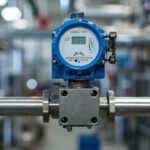
High-speed counters play a vital role in volumetric flow measurement applications where turbine-style or paddle-wheel flow meters generate pulse outputs proportional to fluid volume passing through the system. The frequency of these pulses directly corresponds to the flow rate, and high-speed counter modules continuously accumulate these pulses to calculate totalized flow volumes while simultaneously monitoring instantaneous rates. Water treatment facilities, petroleum refineries, chemical processing plants, and food/beverage production lines all depend on these measurements for inventory management, process control, and regulatory compliance reporting.
Speed Detection and Tachometer Functions
Speed monitoring represents a straightforward yet essential application category where high-speed counters measure the frequency of rotation or linear movement signals. Whether monitoring motor shaft RPM, conveyor belt speed, or paper web tension through ultrasonic Doppler sensors, these counters provide the foundational data for speed regulation systems. Critical machinery protection often relies on speed detection to trigger alarms or shutdown sequences when operating parameters exceed safe thresholds, preventing catastrophic equipment failures and protecting personnel safety.
Technical Specifications and Selection Criteria
Selecting the appropriate high-speed counter for a specific application requires careful evaluation of several technical parameters that directly impact performance and reliability. Understanding these specifications enables engineers to match counter capabilities with application requirements, avoiding both under-specification that compromises accuracy and over-specification that unnecessarily increases system costs.
| Parameter | Description | Typical Range |
|---|---|---|
| Maximum Count Frequency | Maximum input pulse rate the counter can reliably process | 10 kHz – 1 MHz |
| Bit Resolution | Number of bits available for count storage | 16, 32, or 64 bits |
| Input Channels | Number of independent counting channels available | 1 – 8 channels |
| Count Modes | Supported counting directions and triggering options | Up, Down, Quadrature, Pulse/Direction |
| Output Capabilities | Built-in comparison outputs for direct control | Compare, Capture, Gate control |
High-Speed Counter Types and Configurations
Modern industrial systems utilize several distinct types of high-speed counter configurations, each optimized for specific application requirements and system architectures. Understanding the characteristics of each type enables proper selection and implementation.
Built-in PLC Counter Modules
Many programmable logic controllers include integrated high-speed counter functions within their CPU modules, offering a cost-effective solution for applications with moderate counting requirements. These built-in counters typically support frequencies up to 100 kHz and provide basic counting modes suitable for most standard applications. The primary advantage lies in eliminating the need for additional hardware modules, though the available counting capacity may be shared with other CPU functions, potentially limiting performance in demanding scenarios.
Dedicated Counter Modules
For applications requiring superior performance, dedicated high-speed counter modules offer significantly enhanced capabilities compared to integrated solutions. These expansion modules feature independent processing hardware dedicated solely to counting functions, enabling maximum count frequencies exceeding 500 kHz or even reaching into the megahertz range for specialty applications. The dedicated architecture also ensures that counting operations remain unaffected by PLC scan times or other program execution demands, providing deterministic and reliable pulse acquisition.
Intelligent Counter Controllers
Sophisticated counter controllers incorporate programmable logic capabilities alongside counting functions, functioning as standalone data acquisition and control units. These intelligent devices can perform complex calculations, implement state machines, and execute preset outputs without requiring constant communication with a host PLC. This distributed intelligence approach reduces network traffic and response times while enabling localized decision-making for time-critical operations.
Implementation Best Practices
Successful implementation of high-speed counter applications requires attention to several practical considerations that can significantly impact system reliability and measurement accuracy. Following established best practices helps ensure optimal performance while minimizing potential issues during operation and maintenance.
- Signal Conditioning: Implement proper signal conditioning including filtering, amplification, and voltage level conversion to ensure clean pulse inputs that meet the counter’s input specifications. Signal degradation and electrical noise represent the most common causes of counting errors in industrial environments.
- Cable Selection: Use shielded, twisted-pair cables for encoder and sensor connections to minimize electromagnetic interference. Route high-speed signal cables away from power conductors and variable frequency drive outputs that generate significant electrical noise.
- Grounding: Establish proper grounding practices connecting shield grounds at one end only to prevent ground loops that can introduce noise into signal paths. Industrial environments with multiple grounding points frequently experience intermittent counting errors.
- Input Configuration: Verify that counter inputs are configured correctly for the signal type being received, whether single-ended, differential, or line-driver. Mismatched input configurations can result in signal attenuation or complete communication failure.
- Software Configuration: Properly configure counter parameters including count mode, preset values, and output behaviors within the control program. Incorrect software configuration represents a frequent source of unexpected system behavior.
Common Application Industries
High-speed counter applications span numerous industries where their measurement and monitoring capabilities support essential production and quality assurance functions. Each industry presents unique requirements and challenges that influence system design and component selection.
| Industry Sector | Typical Applications | Key Requirements |
|---|---|---|
| Packaging | Product counting, form-fill-seal synchronization, date code placement | High throughput, accurate product tracking |
| Pharmaceutical | Tablet counting, vial inspection, flow rate monitoring | Precision accuracy, regulatory compliance |
| Automotive | Assembly line positioning, quality inspection, parts tracking | Durability, real-time response |
| Food Processing | Conveyor speed control, portioning, packaging quantity verification | Hygienic design, washdown resistance |
|
Sign in
Create an Account
Shopping cart
close
|