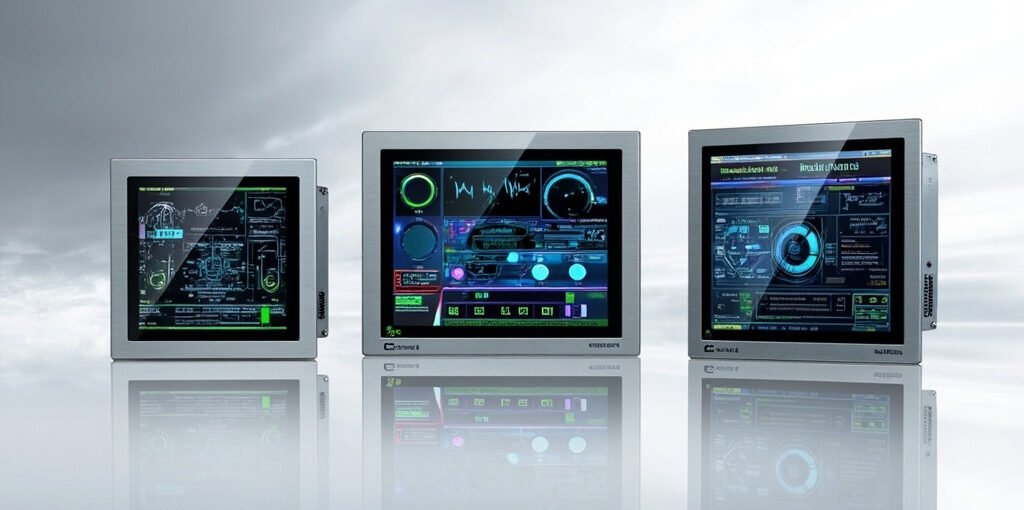
Human-Machine Interfaces (HMIs) serve as the critical bridge between operators and industrial machinery, making the selection of the right HMI brand a decision that directly impacts production efficiency, maintenance costs, and operational safety. In the competitive landscape of industrial automation, Siemens ProFace and Weintek have emerged as two dominant players offering distinct value propositions. This comprehensive review examines these leading HMI platforms across multiple dimensions to help engineers, system integrators, and plant managers make informed purchasing decisions for their specific applications.
Understanding the HMI Landscape: Why Brand Selection Matters
The global HMI market continues to expand as industries embrace digital transformation and smart manufacturing initiatives. Selecting between brands isn’t merely a matter of budget—it’s about ensuring compatibility with your existing infrastructure, software ecosystem, and long-term maintenance capabilities. Both Siemens ProFace and Weintek bring decades of industrial automation experience to the table, yet their approaches to HMI development reflect fundamentally different philosophies that cater to varying market segments.
Siemens ProFace: Engineering Excellence Meets German Precision
Siemens ProFace, a subsidiary of the global technology conglomerate Siemens AG, represents the company’s dedicated HMI and industrial PC division. This brand specializes in high-performance human-machine interfaces designed for demanding industrial environments where reliability cannot be compromised. The ProFace lineup encompasses a wide range of panel sizes from compact 3.5-inch displays to large-format 21.5-inch touchscreen systems, catering to applications from simple machine-level monitoring to complex multi-system integration.
Key Strengths of Siemens ProFace
- Industrial-grade durability: ProFace panels feature IP65-rated front panels and wide operating temperature ranges (-20°C to 60°C), ensuring reliable performance in harsh manufacturing environments.
- Seamless Siemens integration: Native compatibility with SIMATIC S7 PLCs and TIA Portal software significantly reduces programming time and configuration complexity.
- Advanced visualization capabilities: High-resolution displays with vivid color reproduction support sophisticated graphical interfaces and real-time data visualization.
- Extensive communication protocols: Comprehensive support for PROFIBUS, PROFINET, EtherNet/IP, Modbus, and numerous proprietary Siemens protocols.
- Global support network: Backed by Siemens’ worldwide service infrastructure ensuring rapid technical support and spare parts availability.
Weintek: Innovation-Driven Value for Diverse Applications
Weintek, headquartered in Taiwan, has established itself as a leading manufacturer of cost-effective yet feature-rich HMI solutions. The company has gained significant market share by offering professional-grade human-machine interfaces at competitive price points, making industrial automation more accessible to small and medium enterprises. Weintek’s product portfolio emphasizes flexibility, ease of use, and broad compatibility, positioning the brand as an attractive alternative for projects with budget constraints without sacrificing essential functionality.
Key Strengths of Weintek
- Exceptional value proposition: Weintek HMIs deliver comprehensive functionality at price points significantly lower than European competitors, ideal for cost-sensitive projects.
- EasyBuilder Pro software: The intuitive configuration software reduces learning curves and enables rapid application development with minimal training requirements.
- Broad protocol support: Extensive compatibility with PLCs from multiple manufacturers including Siemens, Allen-Bradley, Mitsubishi, Omron, and Delta.
- Compact form factors: Wide range of sizes from 4.3-inch to 15-inch displays suitable for space-constrained installations.
- Active community and resources: Extensive documentation, tutorial videos, and responsive online forums facilitate troubleshooting and knowledge sharing.
Comprehensive Feature Comparison
To provide a clear side-by-side evaluation, the following table compares essential specifications and features across both HMI brands:
| Feature Category | Siemens ProFace | Weintek |
|---|---|---|
| Display Range | 3.5″ to 21.5″ | 4.3″ to 15″ |
| Resolution Options | Up to 1920×1080 (Full HD) | Up to 1024×768 |
| IP Rating (Front) | IP65 / IP66 | IP65 |
| Operating Temperature | -20°C to 60°C | -10°C to 55°C |
| Programming Software | WinCC, TIA Portal | EasyBuilder Pro |
| Communication Ports | PROFINET, PROFIBUS, Ethernet, USB, Serial | Ethernet, USB, RS-232, RS-485 |
| Typical Price Range | $800 – $5,000+ | $200 – $1,500 |
| Warranty Period | 24-36 months | 12-24 months |
Price comparisons can be misleading without considering total cost of ownership. While Weintek HMIs have significantly lower upfront costs, factor in software licensing fees, training expenses, integration complexity, and potential downtime costs when evaluating the true investment required for each platform.
Software Ecosystem: Development Environment Deep Dive
The software environment surrounding an HMI significantly impacts development efficiency and long-term maintainability. Siemens ProFace integrates deeply with the TIA Portal (Totally Integrated Automation Portal), which serves as the unified engineering framework for all Siemens automation products. This integration means that HMI projects share tags, symbols, and communication configurations with PLC programs, eliminating redundant data entry and reducing configuration errors. The TIA Portal’s extensive library of pre-built function blocks and visualization templates accelerates development for common applications.
Weintek’s EasyBuilder Pro takes a different approach, prioritizing accessibility and quick deployment. The software features a drag-and-drop interface that allows even operators with limited programming experience to create functional HMI applications. EasyBuilder Pro supports hundreds of driver templates for PLCs from virtually every major manufacturer, enabling straightforward integration regardless of your existing automation infrastructure. The software’s simulation mode allows testing without physical hardware, accelerating development cycles and reducing startup time.
Performance Analysis: Processing Power and Responsiveness
When evaluating HMI performance, consider both processing capability and communication responsiveness. Siemens ProFace HMIs typically feature ARM Cortex processors with dedicated graphics acceleration, enabling smooth animation rendering and rapid screen transitions even with complex graphical interfaces. The robust hardware specifications ensure consistent performance during demanding operations involving data logging, recipe management, and alarm processing.
Weintek HMIs offer competitive processing power suitable for the majority of industrial applications. While the specifications may appear modest compared to premium Siemens models, the practical performance remains adequate for standard monitoring and control functions. For applications requiring extensive trend analysis, recipe handling, or multi-screen navigation, evaluate the specific model specifications carefully to ensure adequate headroom for current and future requirements.
Industry Applications and Use Case Suitability
Siemens ProFace Ideal Applications
- Large-scale automotive manufacturing: Complex multi-station lines requiring integration with multiple PLC networks and extensive data collection.
- Process industries: Chemical, pharmaceutical, and food & beverage applications demanding FDA compliance, audit trails, and recipe management.
- Heavy machinery OEM: Equipment manufacturers requiring global support networks and long-term spare parts availability.
- Mission-critical monitoring: Facilities where HMI downtime translates directly to significant production losses and safety concerns.
Weintek Ideal Applications
- Small to medium enterprises: Facilities with limited automation budgets seeking maximum functionality per dollar spent.
- Retrofit and modernization projects: Upgrading older equipment with modern HMIs while maintaining existing PLC infrastructure from various manufacturers.
- Water and wastewater treatment: Municipal applications requiring reliable performance at reasonable cost points.
- Packaging and material handling: Lines with moderate complexity requiring straightforward operator interfaces.