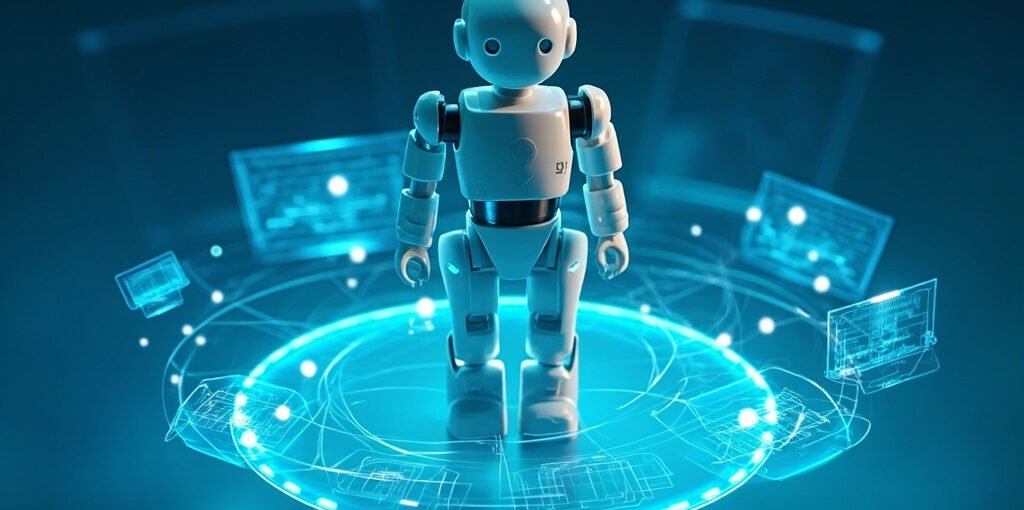
In today’s rapidly evolving automation landscape, robot simulation software has become an indispensable tool for engineers, researchers, and manufacturers worldwide. These powerful platforms enable users to design, test, and validate robotic systems in a virtual environment before any physical implementation, dramatically reducing costs, development time, and operational risks. Whether you’re building autonomous mobile robots, industrial manipulators, or cutting-edge humanoid systems, simulation software bridges the gap between conceptual design and real-world deployment.
What Is Robot Simulation Software?
Robot simulation software is a specialized class of computer-aided engineering (CAE) tools that creates a virtual 3D environment where robotic systems can be modeled, programmed, and tested. These platforms use advanced physics engines to replicate real-world conditions such as gravity, friction, collision dynamics, and sensor feedback. Engineers can program robot behaviors, optimize motion paths, and evaluate performance metrics without the expense of physical prototypes.
The technology supports a wide range of robotics applications, from simple pick-and-place operations to complex multi-robot coordination scenarios. By integrating with CAD tools, machine learning frameworks, and digital twin platforms, modern simulation software has evolved into a comprehensive ecosystem for robotics development.
Core Features of Modern Robot Simulation Platforms
The most effective robot simulation tools share several essential capabilities that make them valuable across industries:
- High-fidelity physics engines that accurately model rigid body dynamics, soft body deformation, and fluid interactions.
- Realistic sensor simulation including LiDAR, cameras, IMUs, and force-torque sensors with configurable noise models.
- ROS/ROS2 integration for seamless communication with real robot controllers and middleware.
- Synthetic data generation for training AI and computer vision models with pixel-perfect ground truth labels.
- Multi-robot coordination tools that simulate fleet behavior and inter-robot communication.
- Cloud-based scalability allowing parallel simulation runs for reinforcement learning and large-scale testing.
Top Robot Simulation Software in 2025
The market offers a diverse range of simulation tools tailored to different needs, from open-source frameworks to enterprise-grade solutions. The table below compares the most widely used platforms:
| Software | Developer | License | Best For |
|---|---|---|---|
| Gazebo | Open Source Robotics Foundation | Open Source (Apache 2.0) | ROS-based research and education |
| NVIDIA Isaac Sim | NVIDIA | Free / Enterprise | AI-driven robotics and synthetic data |
| Webots | Cyberbotics | Open Source (Apache 2.0) | Academic research and prototyping |
| CoppeliaSim | Coppelia Robotics | Educational / Commercial | Multi-platform prototyping |
| RoboDK | RoboDK Inc. | Commercial | Industrial robot offline programming |
| Unity Robotics | Unity Technologies | Free / Pro | High-fidelity visual rendering |
| MATLAB Robotics | MathWorks | Commercial | Algorithm development and control systems |
Industries That Rely on Robot Simulation Software
Robot simulation software is transforming operations across numerous sectors. Below are the most prominent industries leveraging this technology:
- Manufacturing and Industrial Automation — optimizing assembly lines and robotic welding cells.
- Automotive — testing autonomous vehicle navigation and self-driving algorithms.
- Healthcare — developing surgical robots and rehabilitation exoskeletons.
- Aerospace and Defense — simulating drone swarms and planetary exploration rovers.
- Logistics and Warehousing — designing autonomous mobile robots (AMRs) for fulfillment centers.
- Agriculture — modeling autonomous tractors and harvesting robots.
- Education and Research — training the next generation of robotics engineers.
Key Benefits of Using Robot Simulation Software
Adopting simulation-driven development delivers measurable advantages that directly impact project success and return on investment:
- Cost Reduction — eliminates the need for multiple physical prototypes, saving thousands of dollars in hardware iterations.
- Safety Assurance — allows dangerous scenarios to be tested without risk to personnel or equipment.
- Faster Time-to-Market — accelerates the design-test-validate cycle from months to days.
- Algorithm Validation — provides a safe sandbox for testing AI models and control algorithms before deployment.
- Scalability — enables thousands of parallel simulations for reinforcement learning training.
- Digital Twin Integration — creates a continuously updated virtual replica of physical systems for predictive maintenance.
How to Choose the Right Robot Simulation Software
Selecting the ideal platform depends on several critical factors that align with your project requirements:
- Define Your Use Case — industrial automation, AI training, academic research, or product development each have different requirements.
- Evaluate Physics Fidelity — applications involving contact-rich manipulation need more accurate physics than simple navigation tasks.
- Check Hardware Compatibility — ensure the software supports your robot models, sensors, and controllers.
- Consider Community and Support — active open-source communities and vendor support can significantly reduce development friction.
- Assess Licensing Costs — balance budget constraints against required features and scalability needs.
- Test Integration Capabilities — verify compatibility with your existing toolchain, including CAD software, version control, and CI/CD pipelines.
⚠️ Pro Tip: Avoid the Sim-to-Real Gap
One of the biggest challenges in robotics is the sim-to-real gap — the discrepancy between simulated and real-world performance. To minimize this, always incorporate domain randomization, validate sensor noise models against actual hardware, and gradually transition from simulation to real-world testing. Never deploy a robot in production based solely on simulation results without thorough physical validation.
Common Challenges in Robot Simulation
Despite its many advantages, robot simulation software presents certain challenges that teams must address proactively:
- Computational Resources — high-fidelity simulations with photorealistic rendering require powerful GPUs and significant memory.
- Modeling Accuracy — creating accurate digital twins of complex mechanical systems can be time-consuming and require expert knowledge.
- Sensor Realism — simulating real-world sensor noise, latency, and failure modes remains a non-trivial engineering task.
- Learning Curve — advanced platforms like NVIDIA Isaac Sim require significant training to use effectively.
- Licensing Complexity — enterprise features often come with tiered pricing that can strain research budgets.