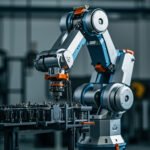
In today’s hyperconnected world, remote robot control has emerged as one of the most transformative technologies shaping industries, research, and even our daily lives. From surgeons performing delicate operations across continents to engineers inspecting pipelines deep underwater, the ability to operate robotic systems from a distance has redefined what is possible. This comprehensive guide explores the technologies, applications, benefits, challenges, and future of remote robot control, providing readers with an in-depth understanding of how this field is revolutionizing the modern world.
What Is Remote Robot Control?
Remote robot control refers to the operation of robotic systems from a distance, often across vast geographic boundaries, using a combination of communication networks, sensors, actuators, and human-machine interfaces. Unlike fully autonomous robots that rely on artificial intelligence alone, remotely controlled robots benefit from human judgment and decision-making in real time. This hybrid approach combines the precision and endurance of machines with the adaptability and problem-solving skills of human operators.
The concept dates back to the early days of radio-controlled devices, but modern remote robotics incorporates cutting-edge technologies like 5G networks, cloud computing, edge AI, haptic feedback, and digital twins. These innovations have dramatically reduced latency, improved reliability, and expanded the range of tasks that robots can perform remotely.
Core Technologies Behind Remote Robot Control
Several foundational technologies work together to enable seamless remote operation of robotic systems. Understanding these components is essential for anyone looking to deploy or invest in remote robotics solutions.
1. Communication Networks
Reliable, low-latency communication is the backbone of remote robot control. Different applications require different network types:
- Wi-Fi and LAN: Ideal for indoor environments like warehouses and laboratories.
- 4G/5G Cellular: Provides wide-area coverage and is critical for mobile robots in the field.
- Satellite Communications: Enables control in remote or maritime locations where terrestrial networks are unavailable.
- Private Mesh Networks: Used in military, mining, and disaster response scenarios where reliability is paramount.
2. Sensors and Actuators
Robots operating remotely must perceive their environment without direct human sight. High-resolution cameras, LiDAR, infrared sensors, ultrasonic detectors, and inertial measurement units (IMUs) provide the rich data streams needed for situational awareness. Advanced actuators translate digital commands into precise physical movements.
3. Human-Machine Interfaces (HMIs)
Modern HMIs include VR headsets, haptic gloves, joystick controllers, brain-computer interfaces, and even voice commands. These interfaces determine how intuitively an operator can control a remote system.
Comparison of Remote Robot Communication Methods
Choosing the right communication method is critical for any remote robot deployment. The table below compares the most common options based on key performance metrics.
| Communication Method | Typical Latency | Range | Best Use Case |
|---|---|---|---|
| Wi-Fi (802.11ax) | 1–10 ms | Up to 100 m | Indoor industrial robots |
| 5G Cellular | 5–20 ms | City-wide | Autonomous vehicles, drones |
| Satellite (LEO) | 30–60 ms | Global | Maritime and exploration robots |
| Fiber Optic (Wired) | Less than 1 ms | Up to thousands of km | Telesurgery, high-precision tasks |
| RF Mesh Network | 10–50 ms | 10–50 km | Military and mining operations |
Key Applications Across Industries
Remote robot control is no longer confined to research labs; it is actively deployed in numerous industries with measurable results.
Healthcare and Telesurgery
Surgeons now use robotic systems to perform minimally invasive procedures from across the room or across the world. With haptic feedback and ultra-low-latency fiber networks, telesurgery offers patients access to top specialists regardless of location.
Industrial Manufacturing
Factories use remote-controlled robotic arms for assembly, welding, and quality inspection. Operators can manage multiple production lines from a single control room, increasing efficiency and reducing exposure to hazardous environments.
Exploration and Hazardous Environments
From deep-sea ROVs exploring the ocean floor to drones mapping volcanic craters, remote robots are vital for missions that would otherwise be impossible or deadly for humans.
Agriculture
Farmers employ GPS-guided tractors and remotely operated drones for crop monitoring, spraying, and harvesting. This not only boosts yields but also reduces the physical strain of large-scale farming.
Defense and Security
Unmanned ground vehicles (UGVs) and unmanned aerial vehicles (UAVs) are routinely used for reconnaissance, bomb disposal, and perimeter security, keeping personnel out of harm’s way.
Benefits of Remote Robot Control
- Safety: Humans can stay out of dangerous environments while still accomplishing critical tasks.
- Cost Efficiency: Reduces the need for on-site personnel, travel, and protective equipment.
- Access: Allows experts to work in remote or inaccessible locations.
- Scalability: A single operator can manage multiple robots across different sites.
- Continuous Operation: Robots can work around the clock without fatigue.
Challenges and Limitations
Despite its many advantages, remote robot control faces several significant challenges that engineers and researchers are actively working to overcome.
- Latency: Even milliseconds of delay can cause performance issues in real-time applications.
- Bandwidth Constraints: High-resolution video and sensor data require substantial bandwidth.
- Cybersecurity Risks: Remote systems are vulnerable to hacking and unauthorized access.
- Reliability: Network outages or interference can interrupt critical operations.
- Operator Skill: Effective remote control requires extensive training and experience.
⚠ Important Tip: Always implement end-to-end encryption, multi-factor authentication, and redundant communication channels when deploying remote robot control systems. A single security breach in critical infrastructure—such as power grids, hospitals, or defense networks—can have catastrophic consequences. Conduct regular penetration testing and keep all firmware updated.
Best Practices for Implementing Remote Robot Control
To maximize the success of any remote robotics deployment, organizations should follow these proven best practices:
- Conduct a thorough site and network assessment before deployment.
- Choose communication protocols that meet your latency and reliability requirements.
- Invest in comprehensive operator training programs.
- Establish clear failsafe and emergency stop procedures.
- Use digital twin simulations to test scenarios before real-world deployment.
- Monitor system performance continuously and update software regularly.
The Future of Remote Robot Control
The next decade promises extraordinary advances in remote robot control. With the rollout of