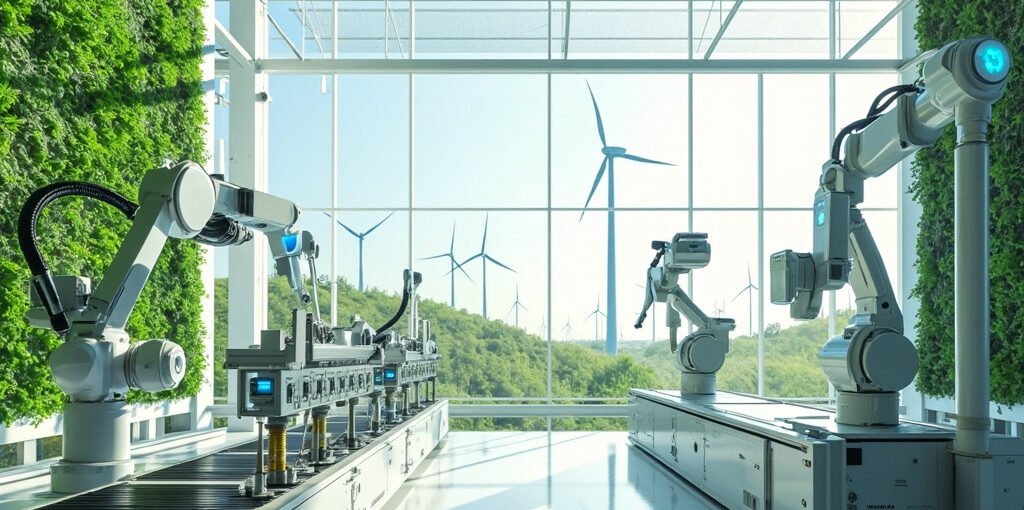
The global manufacturing sector faces an unprecedented challenge: reducing carbon emissions while maintaining productivity and competitiveness. As climate change concerns intensify and regulatory pressures mount, manufacturers are increasingly turning to low-carbon manufacturing automation strategies as a viable pathway toward sustainable production. This comprehensive guide explores how automation technologies can be leveraged to minimize environmental impact, optimize energy consumption, and create resilient manufacturing operations that meet both ecological and economic objectives.
Understanding Low-Carbon Manufacturing Automation
Low-carbon manufacturing automation refers to the integration of automated systems, robotics, and intelligent control mechanisms designed specifically to minimize greenhouse gas emissions throughout the production lifecycle. Unlike traditional automation focused primarily on efficiency and throughput, low-carbon approaches embed environmental considerations into every layer of the manufacturing ecosystem. This paradigm shift recognizes that automation can serve dual purposes: enhancing operational performance while simultaneously reducing the carbon footprint of manufacturing activities.
The foundation of low-carbon manufacturing automation rests on three interconnected pillars: energy optimization, material efficiency, and process intelligence. Energy optimization focuses on reducing electricity and fuel consumption through smart scheduling, variable speed drives, and renewable energy integration. Material efficiency addresses waste reduction, scrap minimization, and circular economy principles through precision automation. Process intelligence leverages data analytics, machine learning, and IoT sensors to continuously monitor and optimize environmental performance in real-time.
Key Strategies for Implementing Low-Carbon Automation
1. Smart Energy Management Systems
Modern manufacturing facilities consume substantial amounts of energy, making energy management a critical component of any low-carbon strategy. Smart energy management systems leverage AI-powered algorithms to analyze consumption patterns, predict demand fluctuations, and optimize energy usage across all equipment and processes.
- Implementing advanced metering infrastructure (AMI) for granular energy monitoring at the equipment level
- Deploying demand response systems that automatically adjust consumption during peak periods
- Integrating on-site renewable energy sources such as solar panels and wind turbines with automated switching systems
- Utilizing predictive maintenance algorithms to prevent energy-wasting equipment failures
- Implementing sleep modes and zero-energy standby for equipment during non-production periods
2. Robotics and Automated Guided Vehicles (AGVs)
The strategic deployment of industrial robots and automated guided vehicles represents a cornerstone of low-carbon manufacturing automation. Contemporary robotic systems consume significantly less energy than legacy equipment while delivering superior precision and consistency. Modern collaborative robots (cobots) operate with remarkably low power consumption, often using less than 500 watts during operation—comparable to a household appliance.
Studies indicate that replacing manual material handling with AGV systems can reduce energy consumption by up to 35% while simultaneously improving workplace safety and reducing product damage rates.
3. Predictive Maintenance and Digital Twins
Predictive maintenance powered by machine learning algorithms and IoT sensor networks represents a transformative approach to reducing manufacturing’s environmental impact. By continuously monitoring equipment health and predicting failures before they occur, manufacturers can optimize maintenance schedules, prevent energy-wasting malfunctions, and extend equipment lifespan—reducing the carbon intensity associated with manufacturing new capital goods.
Digital twin technology complements predictive maintenance by creating virtual replicas of physical assets and processes. These digital models enable manufacturers to simulate different operational scenarios, identify optimization opportunities, and test process changes without disrupting actual production. The result is a continuous improvement cycle that systematically reduces energy consumption and emissions while maintaining or improving product quality.
Technology Stack for Low-Carbon Automation
Successful implementation of low-carbon manufacturing automation requires integration of multiple technology layers. The following table outlines the essential technology components and their carbon-reduction contributions:
| Technology Component | Primary Function | Carbon Reduction Impact | Implementation Complexity |
|---|---|---|---|
| Industrial IoT Sensors | Real-time environmental monitoring | 10-15% energy savings | Medium |
| Machine Learning Platforms | Process optimization and prediction | 15-25% emission reduction | High |
| Cloud Computing Infrastructure | Data processing and analytics | 5-10% efficiency gain | Low-Medium |
| Robotic Process Automation | Task automation and precision | 20-30% material savings | Medium-High |
| Digital Twin Software | Simulation and optimization | 15-20% process optimization | High |
Implementation Roadmap for Manufacturing Facilities
Transitioning to low-carbon manufacturing automation requires a systematic approach that balances ambition with practical considerations. The following implementation roadmap provides a structured framework for facilities seeking to transform their operations:
- Assessment Phase (Months 1-3): Conduct comprehensive energy audits, map current automation systems, identify emission hotspots, and establish baseline metrics for carbon accounting.
- Strategy Development (Months 4-6): Define carbon reduction targets, prioritize implementation projects based on ROI and impact, develop technology integration plans, and secure executive sponsorship.
- Pilot Implementation (Months 7-12): Deploy initial automation projects in controlled environments, validate carbon reduction claims, refine implementation approaches, and document lessons learned.
- Scale-Up Phase (Year 2): Roll out successful pilot programs across additional production lines, integrate disparate systems, establish continuous monitoring protocols, and expand data analytics capabilities.
- Optimization and Innovation (Ongoing): Continuously refine automation strategies based on operational data, explore emerging technologies, benchmark against industry leaders, and pursue incremental improvements.
Benefits Beyond Environmental Compliance
While environmental benefits remain the primary motivation for low-carbon manufacturing automation, organizations implementing these strategies consistently report significant co-benefits that enhance overall business performance. Understanding these advantages helps build compelling business cases for automation investments.
| Benefit Category | Specific Advantages | Typical Impact Range |
|---|---|---|
| Cost Reduction | Lower energy bills, reduced waste disposal costs, decreased maintenance expenses | 15-40% operational cost savings |
| Quality Improvement | Consistent product quality, reduced defects, improved traceability | 20-50% defect rate reduction |
| Workforce Development | Upskilling opportunities, safer working conditions, improved job satisfaction | Higher retention rates |
| Market Positioning | ESG compliance, supply chain requirements, premium product pricing | Competitive differentiation |
| Operational Resilience | Energy independence, flexible production capacity, predictive capabilities | Reduced downtime |
Challenges and Mitigation Strategies
Organizations pursuing low-carbon manufacturing automation strategies must navigate several significant challenges. Acknowledging these obstacles upfront enables proactive planning and increases the likelihood of successful implementation.
Capital Investment Requirements
The initial capital outlay for advanced automation systems can be substantial, creating barriers for smaller manufacturers or organizations with constrained capital budgets. However, numerous financing mechanisms exist including green bonds, sustainability-linked loans, government grants, and utility rebate programs that can significantly reduce effective implementation costs. Leveraging these financial instruments can accelerate timelines and improve project economics.
Workforce Transition and Training
The introduction of advanced automation systems inevitably changes workforce requirements, creating demand for new skill sets while potentially displacing certain existing roles. Successful low-carbon automation strategies must include comprehensive workforce development programs that reskill employees for emerging roles