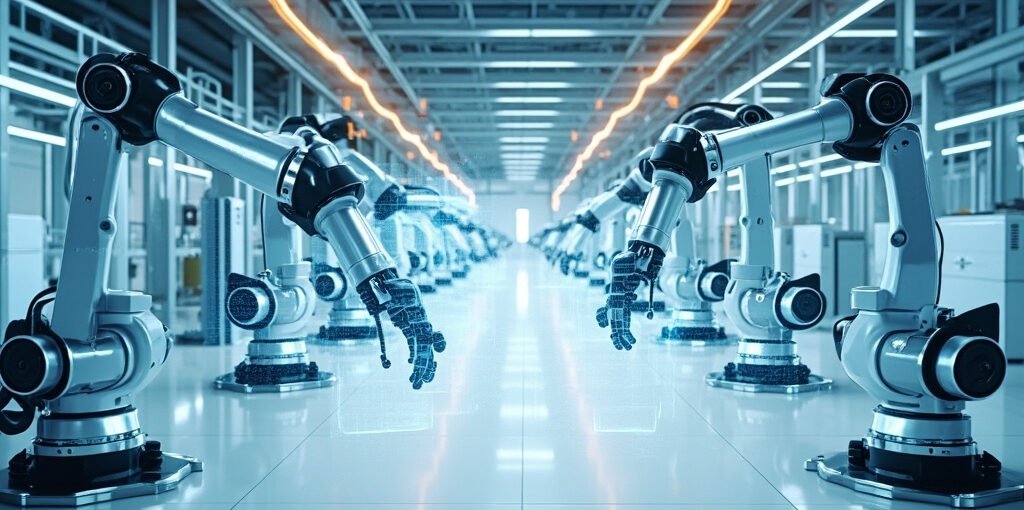
The manufacturing landscape is undergoing a profound transformation as industries evolve from the digital integration of Industry 4.0 to the human-centric approach of Industry 5.0. Smart factories are no longer just about automation and connectivity; they now emphasize collaboration between humans and machines, sustainability, and resilience. Understanding this transition is crucial for manufacturers, technology leaders, and business decision-makers who want to remain competitive in an increasingly complex global market. This comprehensive guide explores the evolution from Industry 4.0 to Industry 5.0, the key technologies involved, practical strategies for transition, and what the future holds for next-generation smart factories.
Understanding Industry 4.0: The Foundation of Smart Manufacturing
Industry 4.0 represents the fourth industrial revolution, characterized by the fusion of physical production operations with digital technologies such as the Internet of Things (IoT), artificial intelligence, cloud computing, and cyber-physical systems. This paradigm shift began in the early 2010s and fundamentally changed how manufacturers design, produce, and deliver products. The core philosophy behind Industry 4.0 revolves around digitalization, automation, and data-driven decision-making.
Key Technologies of Industry 4.0
The technological backbone of Industry 4.0 includes several interconnected systems that work together to create intelligent manufacturing environments. IoT devices and sensors collect vast amounts of data from machines, equipment, and processes in real-time. This data flows into cloud platforms where advanced analytics and machine learning algorithms extract actionable insights. Robotic process automation handles repetitive tasks with precision and speed, while digital twins enable manufacturers to simulate and optimize production processes virtually before implementing changes on the factory floor.
Core Principles of Industry 4.0
Industry 4.0 is built on several foundational principles that guide its implementation across manufacturing sectors. Interoperability allows different machines, systems, and organizations to communicate seamlessly through standardized protocols. Virtualization creates digital replicas of physical assets and processes for monitoring and optimization. Decentralization empowers machines to make autonomous decisions within defined parameters. Real-time capability ensures that data is processed and analyzed instantly to support time-sensitive operations. Finally, service orientation enables the delivery of digital services alongside physical products, creating new revenue streams and business models.
Introducing Industry 5.0: The Human-Centric Revolution
While Industry 4.0 focused heavily on automation and efficiency, Industry 5.0 emerges as a natural evolution that places humans back at the center of manufacturing. The European Commission formally introduced the Industry 5.0 concept in 2021, emphasizing sustainability, worker well-being, and resilience alongside productivity. This paradigm recognizes that machines excel at repetitive, precision tasks, but human creativity, problem-solving abilities, and adaptability remain irreplaceable in complex and unpredictable situations.
Defining Industry 5.0 and Its Core Philosophy
Industry 5.0 represents a shift from technology-centric automation to a human-centric approach where technology serves as an enhancer of human capabilities rather than a replacement. The philosophy acknowledges that manufacturing is not just about producing goods efficiently but also about creating value for workers, communities, and society at large. This means designing systems that support human well-being, provide meaningful work, and contribute to broader societal goals such as environmental sustainability and economic resilience.
The Three Pillars of Industry 5.0
The Industry 5.0 framework rests on three interconnected pillars that distinguish it from its predecessor. The first pillar is human-centricity, which prioritizes the role of workers as creative problem-solvers and ensures that technology enhances rather than diminishes human involvement. The second pillar is sustainability, requiring manufacturers to adopt circular economy principles, reduce waste, minimize energy consumption, and consider environmental impacts throughout the product lifecycle. The third pillar is resilience, focusing on building manufacturing systems that can adapt to disruptions, recover quickly from setbacks, and maintain operations under challenging conditions.
Industry 4.0 vs Industry 5.0: A Comprehensive Comparison
Understanding the differences between these two industrial paradigms is essential for manufacturers planning their technology investments and strategic roadmaps. While Industry 4.0 and Industry 5.0 share some technological foundations, their philosophies, priorities, and outcomes differ significantly.
| Aspect | Industry 4.0 | Industry 5.0 |
|---|---|---|
| Primary Focus | Automation, efficiency, and digitalization | Human-centricity, sustainability, and resilience |
| Role of Humans | Supervisors and system designers | Collaborators and creative problem-solvers |
| Decision Making | Primarily autonomous machines | Human-machine collaboration |
| Sustainability Approach | Often an afterthought | Core design principle |
| Production Philosophy | Mass customization and scale | Personalized, demand-driven production |
| Supply Chain | Optimized for efficiency | Optimized for resilience and flexibility |
| Data Usage | Maximizing data extraction | Responsible and purpose-driven data use |
| Worker Skills | Technical and digital competencies | Digital literacy plus creativity and empathy |
Technologies Driving the Next-Generation Smart Factory
Both Industry 4.0 and Industry 5.0 rely on a sophisticated technology stack, but Industry 5.0 introduces additional tools and capabilities that emphasize human-machine collaboration and sustainability. The convergence of these technologies creates powerful possibilities for smart factories of the future.
Artificial Intelligence and Machine Learning
AI and machine learning continue to play pivotal roles in both paradigms, but their application evolves in Industry 5.0. Rather than focusing solely on optimization and predictive maintenance, AI in Industry 5.0 supports human decision-making through explainable AI systems that provide transparent recommendations. Collaborative AI systems work alongside human operators, learning from their expertise while augmenting their capabilities with data-driven insights.
Cobots and Advanced Robotics
Collaborative robots, or cobots, represent a key technology in Industry 5.0. Unlike traditional industrial robots that operate in isolated cells, cobots are designed to work safely alongside humans, assisting with tasks that require strength, precision, or endurance while humans contribute creativity, judgment, and adaptability. This collaboration enhances productivity while reducing physical strain on workers and creating more engaging work environments.
Digital Twins and Simulation
Digital twin technology enables manufacturers to create virtual replicas of physical assets, processes, and even entire factories. In Industry 4.0, digital twins primarily serve optimization purposes. Industry 5.0 expands their use to scenario planning, sustainability assessment, and human factors analysis. Manufacturers can simulate how changes affect energy consumption, worker safety, and environmental impact before implementation.
Edge Computing and 5G Connectivity
Real-time data processing is critical for both paradigms, but Industry 5.0 demands faster, more reliable connectivity to support human-machine collaboration. Edge computing brings data processing closer to the source, reducing latency and enabling real-time responses. 5G networks provide the bandwidth and speed required for transmitting high-definition video, sensor data, and control signals that support collaborative operations.
Additive Manufacturing and Modular Production
3D printing and additive manufacturing enable new approaches to production that align with Industry 5.0 principles. Manufacturers can create customized products on-demand, reduce material waste, and produce complex geometries that would be impossible with traditional methods. Modular production systems allow factories to reconfigure quickly in response to changing demands, enhancing both efficiency and resilience.
Practical Strategies for Transitioning Your Smart Factory
Transitioning from Industry 4.0 to Industry 5.0 requires careful planning, strategic investments, and a commitment to continuous improvement. Manufacturers should approach this evolution as a journey rather than a destination, recognizing that technology alone is insufficient without corresponding changes in culture, skills, and processes.
Assessment and Gap Analysis
Begin by evaluating your current state of digital maturity and identifying gaps relative to Industry 5.0 principles. Conduct a comprehensive audit of existing technologies, processes, workforce skills, and organizational culture. Identify areas where automation has created efficiency gains but may have reduced flexibility or worker satisfaction. This assessment provides a foundation for developing a realistic transition roadmap that addresses your specific context and priorities.
Workforce Development and Upskilling
Industry 5.0 requires a workforce that can collaborate effectively with intelligent systems while contributing uniquely human capabilities. Invest in training programs that develop digital literacy across your organization while also nurturing creativity, critical thinking, and interpersonal skills. Create career pathways that allow workers to evolve from operators to collaborators, system designers, and innovation leaders. Engaging workers in the transition process builds ownership and ensures that technology deployments align with operational realities.
Phased Technology Implementation
Adopt a phased approach to technology deployment that balances innovation with operational stability. Start with pilot projects that demonstrate value and build organizational capability before scaling. Prioritize investments that address your most significant challenges, whether those relate to efficiency, sustainability, resilience, or worker experience. Maintain flexibility in your technology architecture to accommodate evolving requirements and emerging capabilities.
Cultural Transformation
Technology implementation without cultural change rarely delivers expected results. Industry 5.0 requires a culture that values human contribution, embraces continuous learning, and balances multiple objectives beyond pure efficiency. Leaders should model desired behaviors, celebrate successes that demonstrate Industry 5.0 principles, and create forums for worker input into technology and process decisions. This cultural foundation ensures that technological investments translate into sustainable organizational improvements.
Benefits of Embracing Industry 5.0
Manufacturers who successfully navigate the transition to Industry 5.0 can expect to realize significant benefits across operational, environmental, and social dimensions. These benefits create competitive advantages that extend beyond simple cost reduction to include enhanced innovation capacity, stronger brand reputation, and improved ability to attract and retain talent.
Operational Excellence
Industry 5.0 approaches combine the efficiency gains of automation with the flexibility and adaptability that human workers provide. This balance enables manufacturers to respond quickly to changing market conditions, customize products to meet specific customer requirements, and maintain quality even as production volumes and product varieties increase. The resilience built into Industry 5.0 systems also reduces downtime and improves recovery from disruptions.
Environmental Sustainability
By design, Industry 5.0 prioritizes sustainability throughout the production lifecycle. Circular economy approaches reduce waste and enable resource recovery. Energy-efficient technologies minimize carbon footprints. Sustainable supply chain practices ensure that environmental responsibilities extend beyond factory walls. These sustainability credentials increasingly influence customer purchasing decisions and regulatory compliance requirements.
Enhanced Worker Experience
Industry 5.0 creates more engaging and meaningful work by eliminating tedious tasks and enabling workers to focus on creative and problem-solving activities. Improved workplace safety, better work-life balance, and clearer career development pathways help manufacturers attract and retain skilled workers in an increasingly competitive labor market. The human-centric approach also tends to increase worker satisfaction, productivity, and organizational commitment.
Innovation and Competitive Advantage
The combination of human creativity and technological capability in Industry 5.0 creates fertile ground for innovation. Workers who understand both technology and operational realities are well-positioned to identify improvement opportunities and develop novel solutions. Manufacturers that excel at this human-machine collaboration can differentiate themselves through superior products, faster innovation cycles, and more responsive customer service.
Challenges and How to Address Them
The transition to Industry 5.0 presents significant challenges that manufacturers must anticipate and manage effectively. Understanding these challenges in advance enables more realistic planning and resource allocation.
Investment Requirements
Industry 5.0 technologies require substantial investments in equipment, software, training, and organizational development. Many manufacturers face constraints on available capital and must prioritize carefully among competing needs. Address this challenge by focusing on high-impact pilot projects, exploring financing options such as green loans or sustainability-linked financing, and building business cases that capture benefits beyond direct cost reduction.
Skills Gap and Talent Acquisition
The hybrid skills required for Industry 5.0—combining technical knowledge with creativity and collaboration abilities—are in high demand and limited supply. Manufacturers should develop comprehensive talent strategies that include internal development programs, partnerships with educational institutions, and creative approaches to sourcing talent from adjacent industries. Creating compelling employee value propositions that emphasize meaningful work and growth opportunities can improve recruitment outcomes.
Integration Complexity
Integrating new Industry 5.0 technologies with existing Industry 4.0 infrastructure can be technically challenging and require careful change management. Legacy systems may lack the flexibility needed for human-centric features or sustainability monitoring. Adopt modular architectures that allow incremental upgrades, establish clear integration standards, and allocate adequate time and resources for testing and optimization.
Measurement and ROI Challenges
Quantifying the returns on Industry 5.0 investments can be difficult because many benefits—such as improved worker well-being or enhanced resilience—are not easily captured in traditional financial metrics. Develop comprehensive measurement frameworks that include operational, environmental, and social indicators alongside financial performance. This broader perspective demonstrates value and supports continued investment in Industry 5.0 capabilities.
The Future Outlook for Smart Factories
The evolution from Industry 4.0 to Industry 5.0 represents a fundamental shift in how manufacturers create value. Looking ahead, several trends will shape the continued development of smart factories and influence competitive dynamics in manufacturing industries worldwide.
Hyper-Personalization will become increasingly feasible as additive manufacturing, AI-driven design, and flexible production systems mature. Manufacturers will be able to offer products tailored to individual customer preferences without sacrificing efficiency. This capability will reshape competitive dynamics in many industries, favoring manufacturers that can balance customization with operational complexity.
Distributed and Resilient Supply Networks will replace the globally optimized supply chains that characterized earlier decades. Geopolitical tensions, pandemic disruptions, and climate risks have demonstrated the vulnerabilities of extended global supply chains. Industry 5.0 principles support the development of more regional, diversified, and adaptable supply networks that can maintain operations under various disruption scenarios.
Regenerative Manufacturing will move beyond sustainability to actively restore environmental quality. Advanced recycling technologies, carbon capture integration, and bio-based materials will enable factories to contribute positively to environmental outcomes rather than merely minimizing harm. This regenerative approach aligns manufacturing with broader societal goals and addresses increasingly stringent regulatory requirements.