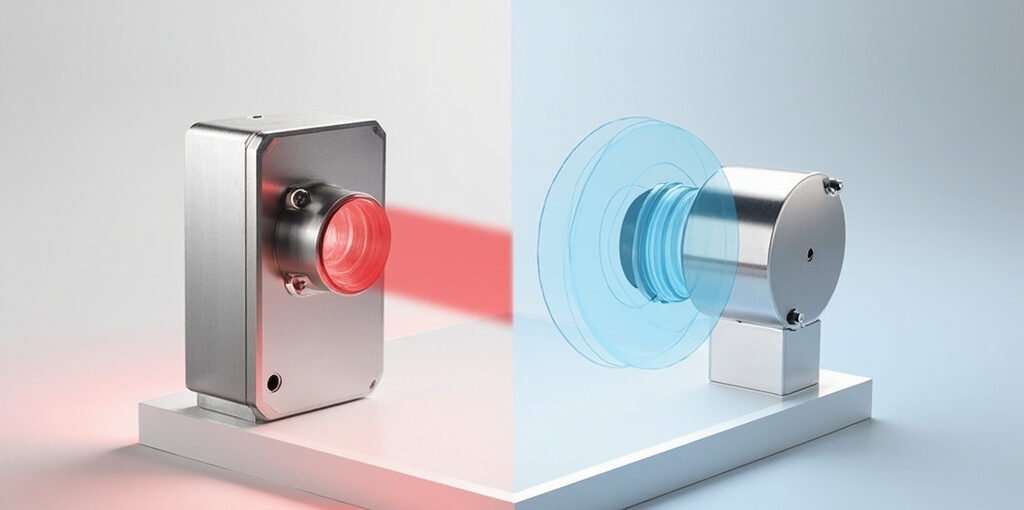
Selecting the right industrial sensor is a critical decision that directly impacts production efficiency, equipment longevity, and overall operational costs. Among the most commonly deployed sensing technologies in modern manufacturing and automation systems are photoelectric sensors and proximity sensors. Both technologies serve the fundamental purpose of detecting the presence or absence of objects, yet they operate on entirely different principles and excel in distinct applications. This comprehensive guide explores the key characteristics, advantages, limitations, and optimal use cases for each sensor type, providing engineers, technicians, and decision-makers with the knowledge necessary to make informed sensor selection decisions that align with their specific operational requirements and environmental conditions.
Understanding Photoelectric Sensors
Photoelectric sensors utilize light-based detection mechanisms to identify objects within their field of view. These sophisticated devices emit a beam of light—typically from an LED or laser diode—and detect the reflection, interruption, or transmission of that light to determine object presence. The fundamental operating principle revolves around three primary configurations that determine how the sensor responds to light changes.
Types of Photoelectric Sensing Modes
Photoelectric sensors operate in three distinct modes, each offering unique advantages for specific applications:
- Through-Beam Mode: The transmitter and receiver are mounted opposite each other, with the object breaking the light beam when passing between them. This configuration offers the longest sensing distance and highest precision.
- Retro-Reflective Mode: Both transmitter and receiver are housed in the same unit, with a reflector positioned across from the sensor. The object interrupts the reflected light beam, providing medium-range detection with easy alignment.
- Diffuse (Reflective) Mode: The object itself reflects the light back to the sensor. This mode requires no reflector and works best for close-range detection where the target object has adequate reflectivity.
Understanding Proximity Sensors
Proximity sensors, also known as proximity switches or position sensors, detect objects without physical contact by sensing changes in electromagnetic fields or capacitance. These sensors are designed to detect metallic and non-metallic objects, with various technologies offering different capabilities suited to specific industrial environments and detection requirements.
Types of Proximity Sensor Technologies
- Inductive Proximity Sensors: Generate an electromagnetic field that detects metallic objects approaching the sensor face. Ideal for detecting ferrous and non-ferrous metals in manufacturing environments.
- Capacitive Proximity Sensors: Detect both metallic and non-metallic objects by sensing changes in capacitance caused by the dielectric properties of the target material.
- Magnetic Proximity Sensors: Respond to magnetic fields, typically from permanent magnets, offering extremely reliable detection in harsh environments.
- Ultrasonic Proximity Sensors: Use sound waves to detect objects, effective for measuring distances and detecting transparent or difficult-to-detect materials.
⚠️ Important Selection Tip:
When selecting proximity sensors, always verify the target material compatibility. Inductive sensors respond only to metal, while capacitive sensors can detect plastics, liquids, and granular materials. Using the wrong sensor type will result in complete detection failure.
Comprehensive Comparison: Photoelectric vs Proximity
Understanding the fundamental differences between these sensor technologies is essential for making appropriate selection decisions. The following comparison table highlights key performance characteristics and practical considerations.
| Characteristic |
Photoelectric Sensors |
Proximity Sensors |
| Sensing Distance |
Up to several hundred meters (through-beam) |
Typically 1mm to 60mm (inductive) |
| Target Material |
Any material that reflects or blocks light |
Metal only (inductive) or various materials (capacitive) |
| Response Speed |
Very fast (microseconds) |
Fast (milliseconds) |
| Environmental Immunity |
Affected by dust, dirt, and ambient light |
Highly resistant to contaminants |
| Installation Complexity |
Moderate to high (alignment required) |
Low (simple mounting) |
| Cost Range |
$30 to $500+ |
$15 to $300+ |
Application Scenarios and Optimal Use Cases
Each sensor technology excels in specific application environments. Understanding where photoelectric and proximity sensors demonstrate their strengths helps ensure optimal performance and return on investment.
Ideal Applications for Photoelectric Sensors
- Conveyor Belt Monitoring: Detecting products, packages, and materials on conveyor systems with high accuracy and long sensing distances.
- Color and Contrast Detection: Distinguishing between different colored objects or detecting print marks on packaging materials.
- Level Sensing in Containers: Monitoring liquid or solid material levels in tanks, hoppers, and containers without contact.
- Transparent Object Detection: Identifying glass, plastic bottles, and other transparent materials in production lines.
- High-Speed Counting: Counting products, parts, or events at high speeds due to microsecond response times.
- Travel and Position Sensing: Detecting object positions in printing, packaging, and material handling equipment.
Ideal Applications for Proximity Sensors
- Metal Part Detection: Identifying and counting metal components in machining, assembly, and quality control operations.
- End-of-Travel Sensing: Detecting the fully closed or fully open position of pneumatic and hydraulic cylinders.
- Gear and Camshaft Timing: Providing precise position feedback in rotary equipment and indexing systems.
- Hygienic Environments: Food processing, pharmaceutical, and medical device manufacturing where sensor contamination must be avoided.
- Heavy Industrial Environments: Welding, forging, and metalworking applications with high temperatures and contamination.
- Machine Tool Monitoring: Tool presence detection, spindle orientation, and workshop equipment automation.
Selection Criteria and Decision Framework
Making the right sensor selection requires careful evaluation of multiple factors that influence sensor performance, longevity, and total cost of ownership. Consider the following criteria when evaluating photoelectric versus proximity sensors for your application.
Key Factors to Consider
| Selection Factor |
Recommended Choice |
Rationale |
| Long sensing distance required |
Photoelectric |
Through-beam sensors reach 100+ meters |
| Metal object detection only |
Proximity (Inductive) |
Optimized for metallic targets |
| Dusty or dirty environment |
Proximity |
Not affected by light-blocking contaminants |
| Transparent material detection |
Photoelectric |
Special modes for clear objects |
| High temperature environment |
Proximity |
High-temp proximity sensors available |
| Non-metallic target materials |
Photoelectric or Capacitive |
Both can detect plastics, wood, etc. |