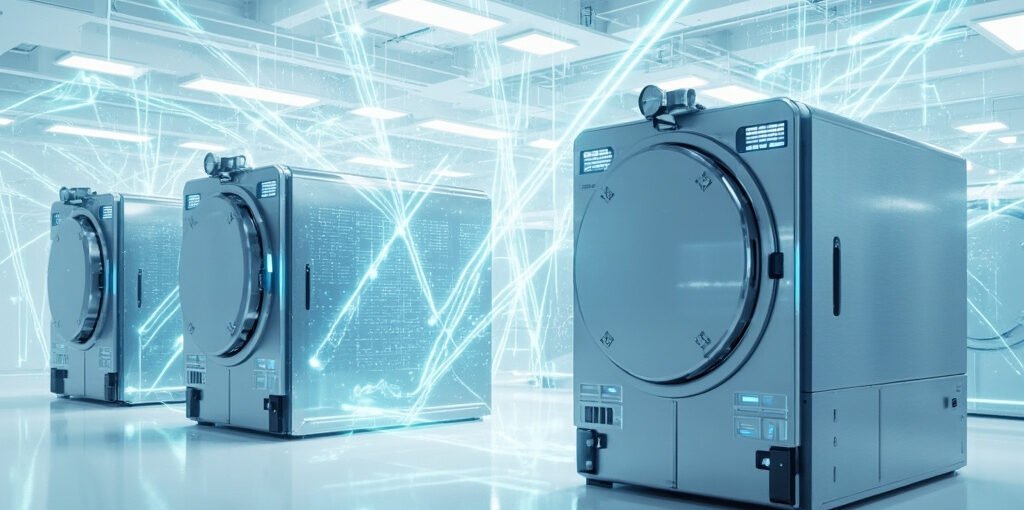
In the modern healthcare and laboratory environments, sterilization equipment communication plays a pivotal role in ensuring safety, compliance, and operational efficiency. As sterilization processes become increasingly automated, the ability of devices to exchange data, report status, and integrate with facility management systems has become essential. This article explores the core concepts, technologies, standards, and best practices surrounding sterilization equipment communication, providing a comprehensive guide for technicians, biomedical engineers, and healthcare administrators.
What Is Sterilization Equipment Communication?
Sterilization equipment communication refers to the methods, protocols, and systems used to transfer data between sterilizers, monitoring devices, and central management platforms. This includes real-time monitoring of cycle parameters such as temperature, pressure, humidity, and exposure time, as well as archiving records for regulatory compliance with bodies like the FDA, CDC, and ISO.
Effective communication enables healthcare facilities to track sterilization cycles remotely, receive alerts on cycle failures, and generate audit-ready documentation without manual intervention. This is especially critical in hospitals, pharmaceutical plants, and research laboratories where sterility assurance is non-negotiable.
Core Communication Protocols Used in Sterilization Equipment
Sterilization devices typically employ a combination of wired and wireless protocols to communicate with controllers, PCs, and network systems. Below are the most common protocols used in the industry:
- RS-232 / RS-485: Legacy serial communication standards still found in older sterilizers, offering simple point-to-point data exchange.
- Ethernet (TCP/IP): The modern standard for connecting sterilizers to hospital networks, allowing integration with HL7 and EMR systems.
- USB: Used primarily for direct data download to flash drives, enabling portable cycle record storage.
- Wi-Fi (IEEE 802.11): Enables wireless cycle monitoring, reducing cabling complexity in central sterile services departments (CSSDs).
- Bluetooth & RFID: Used for wireless load tracking and instrument identification in modern autoclave workflows.
- Modbus & OPC UA: Industrial communication protocols increasingly adopted for SCADA integration in pharmaceutical sterilization lines.
Key Components of a Sterilization Communication System
A complete sterilization communication ecosystem consists of several hardware and software layers working in harmony. The following table outlines the essential components:
| Component | Function | Example |
|---|---|---|
| Sensor Module | Captures temperature, pressure, and humidity data | PT100 probes, pressure transducers |
| Controller / PLC | Manages cycle logic and data aggregation | Siemens S7, Allen-Bradley CompactLogix |
| HMI / Touchscreen | Operator interface for cycle start/stop and visualization | Beijer, Weintek panels |
| Network Gateway | Bridges sterilizer protocols to LAN/WAN | Moxa, Hirschmann switches |
| Monitoring Software | Centralizes cycle records and alerts | Getinge T-DOC, Steris RealView |
Regulatory Standards Governing Communication
Sterilization communication systems must comply with multiple international and regional standards to ensure data integrity, traceability, and patient safety. The most relevant standards include:
- ISO 17665: Specifies validation and routine control requirements for moist heat sterilization, including data logging.
- EN 285: European standard for large steam sterilizers, defining communication interfaces for cycle documentation.
- 21 CFR Part 11 (FDA): Governs electronic records and electronic signatures, critical for pharmaceutical sterilization.
- HL7 / FHIR: Healthcare interoperability standards for exchanging sterilization data with hospital information systems.
- IEC 62366-1: Addresses usability engineering, indirectly impacting communication interface design.
⚠️ Compliance Tip: Always ensure your sterilization communication system is validated per 21 CFR Part 11 if you operate in a pharmaceutical or medical device manufacturing environment. This includes audit trails, electronic signature controls, and time-stamped data integrity. Failure to comply can result in FDA Form 483 observations and production shutdowns.
Wired vs. Wireless Communication: Pros and Cons
Choosing between wired and wireless communication for sterilization equipment depends on facility layout, cybersecurity policies, and budget. Below is a comparative overview:
| Parameter | Wired (Ethernet/RS-485) | Wireless (Wi-Fi/Bluetooth) |
|---|---|---|
| Reliability | Very high; immune to RF interference | Moderate; susceptible to interference |
| Installation Cost | Higher due to cabling | Lower; no conduit required |
| Cybersecurity | Easier to secure on isolated LANs | Requires WPA3 and segmentation |
| Mobility | Limited; static endpoints | High; supports mobile carts |
| Bandwidth | Gigabit capable | Typically 300 Mbps–1 Gbps |
Best Practice Recommendation
For mission-critical sterilization equipment, a hybrid approach is often optimal: use wired Ethernet as the primary backbone for high-priority sterilizers, and reserve wireless for non-critical mobile units like low-temperature plasma sterilizers or tabletop units. This balances reliability with flexibility.
Common Challenges in Sterilization Communication
Even with modern infrastructure, sterilization communication systems can encounter several issues. Here are the most frequently reported challenges:
- Data Loss During Cycle Interruptions: Power outages can corrupt unsaved cycle data if UPS systems are not properly sized.
- Protocol Mismatch: Legacy sterilizers using proprietary protocols may not integrate with modern SCADA or EMR systems.
- Cybersecurity Vulnerabilities: Connected sterilizers are increasingly targeted by ransomware, especially in hospitals.
- Clock Drift: Misaligned timestamps across devices can invalidate cycle records during audits.
- Sensor Calibration Errors: Uncalibrated probes generate misleading data, leading to false cycle failures or, worse, undetected contamination.
Future Trends in Sterilization Equipment Communication
The sterilization industry is rapidly evolving, with several emerging trends reshaping how equipment communicates and shares data:
- IoT-Enabled Smart Sterilizers: Cloud-connected devices offering predictive maintenance and AI-driven cycle optimization.
- Digital Twins: Virtual replicas of sterilization chambers enabling simulation and training without physical equipment.
- Blockchain for Traceability: Immutable records of every sterilization cycle, useful for sterile supply chain audits.
- 5G Connectivity: Ultra-low latency wireless communication enabling real-time remote supervision of multiple facilities.
- AI-Powered