Brushless DC (BLDC) motors have revolutionized modern motion control across industries ranging from automotive and aerospace to consumer electronics and industrial automation. Unlike traditional brushed motors, BLDC motors use electronic commutation rather than mechanical brushes, offering superior efficiency, longer lifespan, and reduced maintenance. Understanding BLDC motor control is essential for engineers, technicians, and enthusiasts who want to harness the full potential of these high-performance machines. This comprehensive guide explores the principles, techniques, components, and applications of BLDC motor control systems.
What is a BLDC Motor?
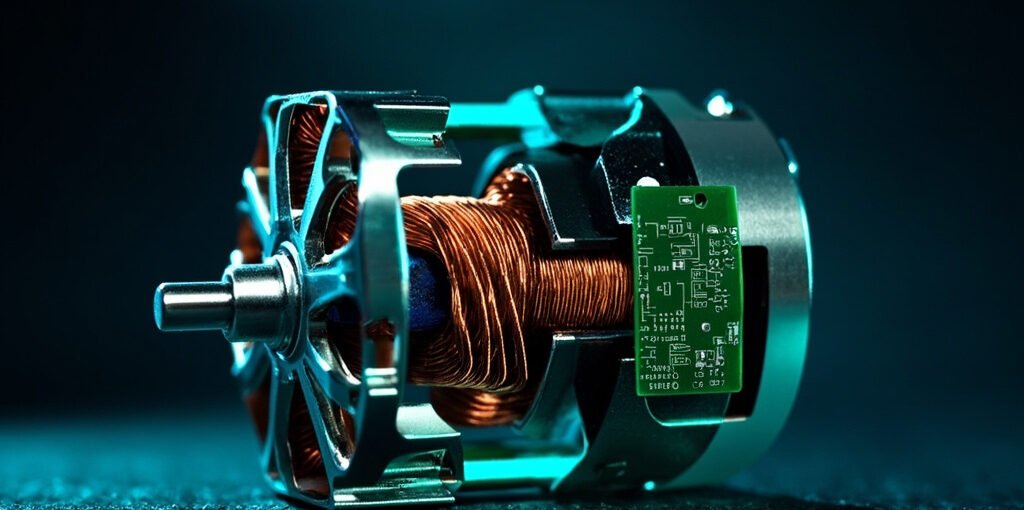
A Brushless DC motor is a synchronous electric motor powered by direct current electricity. The motor uses a permanent magnet rotor and an electronically controlled stator winding system. Because there are no brushes to wear out, BLDC motors deliver exceptional reliability and performance. The electronic commutation process requires sophisticated control algorithms and power electronics to switch the stator phases in the correct sequence.
Working Principle of BLDC Motor Control
The fundamental operation of a BLDC motor relies on the interaction between the permanent magnet rotor and the electromagnetic field generated by the stator coils. The control system determines the position of the rotor using sensors or sensorless techniques and then energizes the appropriate stator phases to create rotational motion. This process occurs thousands of times per second to maintain smooth and efficient operation.
The control circuit typically involves a microcontroller, gate drivers, and a three-phase inverter. The microcontroller receives rotor position feedback, calculates the required switching pattern, and sends PWM signals to the inverter, which in turn drives the motor windings.
Common BLDC Motor Control Techniques
Several control strategies are used in BLDC motor applications, each with its own advantages:
- Trapezoidal (Six-Step) Commutation: The simplest method where two phases are energized at any given time, creating a trapezoidal back-EMF waveform response. This technique is cost-effective and easy to implement.
- Sinusoidal Control: Uses smooth sine wave currents to drive the motor, resulting in lower torque ripple and quieter operation compared to trapezoidal control.
- Field-Oriented Control (FOC): Also known as vector control, FOC provides the highest performance by independently controlling torque and flux, enabling precise speed and position control.
- Sensorless Control: Eliminates the need for physical position sensors by estimating rotor position through back-EMF measurement or observer algorithms.
Key Components of a BLDC Motor Control System
A complete BLDC motor control system consists of several critical components working together:
- Microcontroller/DSP: The brain of the system that processes sensor data and generates control signals.
- Power Inverter: A three-phase bridge circuit using MOSFETs or IGBTs to switch power to the motor windings.
- Gate Drivers: Interface circuits that amplify control signals to drive the high-power switches.
- Position Sensors: Hall sensors, encoders, or resolvers that provide rotor position feedback.
- Current Sensors: Measure phase currents for protection and advanced control algorithms.
⚠ Important Tip: When designing a BLDC motor control system, always include proper overcurrent protection and thermal monitoring. Inadequate protection can lead to catastrophic MOSFET failure, winding damage, or even fire hazards. Always size your components with at least 30% safety margin above the expected peak current.
Comparison of Control Techniques
Understanding the trade-offs between different control methods is crucial for selecting the right approach for your application:
| Control Method | Complexity | Torque Ripple | Efficiency | Cost |
|---|---|---|---|---|
| Trapezoidal | Low | High | 85-90% | Low |
| Sinusoidal | Medium | Medium | 90-95% | Medium |
| FOC (Vector) | High | Very Low | 95-98% | High |
| Sensorless FOC | Very High | Very Low | 95-98% | High |
Applications of BLDC Motor Control
BLDC motors are used in countless applications due to their high efficiency and reliability:
- Electric Vehicles (EVs): Traction motors, power steering, and HVAC systems.
- Industrial Automation: CNC machines, robotic arms, conveyor systems, and servo drives.
- Consumer Electronics: Computer cooling fans, hard drives, and drones.
- Medical Equipment: Surgical tools, infusion pumps, and imaging systems.
- Aerospace: Flight control actuators, fuel pumps, and satellite positioning systems.
- Home Appliances: Washing machines, refrigerators, and air conditioners.
Advantages of BLDC Motor Control
Implementing BLDC motor control systems provides numerous benefits over traditional brushed motor designs:
- Higher Efficiency: BLDC motors typically achieve 85-98% efficiency, significantly higher than brushed motors.
- Longer Lifespan: No brush wear means operational life exceeding 20,000 hours in many applications.
- Better Speed Range: Precise electronic control enables wide speed ranges with excellent regulation.
- Lower Maintenance: Absence of brushes eliminates the need for periodic replacement.
- Reduced Noise: Electronic commutation produces less acoustic noise and EMI.
- Better Thermal Performance: Improved heat dissipation due to the rotor design.
Challenges in BLDC Motor Control
Despite their advantages, BLDC motor control systems come with certain challenges that engineers must address:
- Complex Electronics: Requires sophisticated controllers, drivers, and sensors increasing the initial cost.
- EMI Issues: High-frequency switching generates electromagnetic interference that must be filtered.
- Sensor Reliability: Hall sensors and encoders can fail, requiring redundancy or sensorless techniques.
- Startup Behavior: Sensorless control can be difficult at low speeds where back-EMF is minimal.
- Software Complexity: Advanced algorithms like FOC require significant computational resources.
Future Trends in BLDC Motor Control
The future of BLDC motor control is being shaped by several emerging technologies and trends:
Integration with AI and Machine Learning: Modern motor controllers are incorporating AI-based algorithms for predictive maintenance, adaptive control, and fault detection. These smart systems can optimize performance in real-time and predict failures before they occur.
Wide Bandgap Semiconductors: The adoption of SiC (Silicon Carbide) and GaN (Gallium Nitride) transistors is enabling higher switching frequencies, reduced losses, and more compact designs. These technologies are particularly important for high-power EV applications.
Integrated Motor Controllers: System-on-chip (SoC) solutions are combining microcontroller cores, gate drivers, and power stages into single packages, dramatically reducing the size and cost of motor control solutions.
Wireless Monitoring: IoT-enabled motor controllers allow remote monitoring of motor health, performance metrics, and environmental conditions, enabling truly smart factory and smart vehicle applications.